
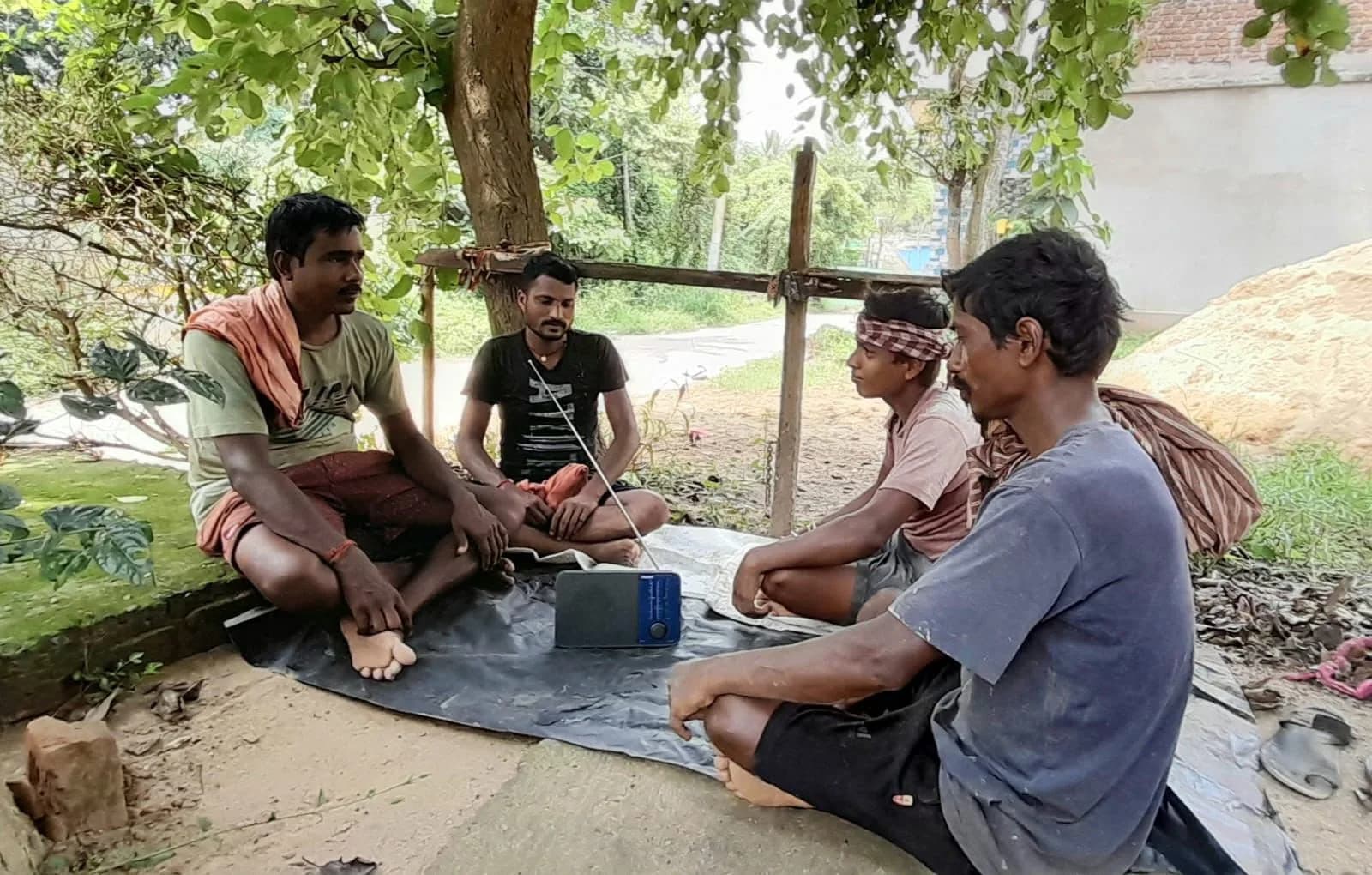
From an Unheard Voice to a Celebrated Folk Artist How Radio Outreach gave Trilochan Kandi a new identity
In the quiet villages of Odisha, where the rhythm of rural life still beats to the sound of traditional instruments and age-old melodies, countless voices remain unheard. Their songs carry the memories of generations, their music preserves stories older than written history, yet many of these artists live far away from the glare of recognition.
For one such artist, however, a community radio station became the bridge between obscurity and recognition.
Radio Outreach 90.8 FM, a community radio station based in Jagatsinghpur district, has been giving a dedicated platform to Odisha’s traditional folk music through a daily programme that celebrates the voices, rhythms and cultural expressions of rural artists. The station has so far recorded and broadcast performances of around 100 folk singers and musicians, many of whom come from socially and economically disadvantaged backgrounds and have never received formal recognition for their artistic contributions.
Every evening at 9 pm, the airwaves of Radio Outreach come alive with the rustic and soulful sounds of Odisha — from Khanjani and Dhudki to Ghodanacha Gita, Daskathia, Pala, Sankirtan and other traditional forms. In an age when contemporary music dominates much of the media landscape, these broadcasts offer a precious window into the cultural soul of rural Odisha.
Among the many voices that have travelled through the station's microphone, the story of Trilochan Kandi, from Chanda village in Tirtol block of Jagatsinghpur district, stands apart.
A voice waiting to be heard Trilochan is a gifted exponent of Khanjani folk music, a traditional form deeply rooted in Odisha's oral cultural heritage. His music was born not in a recording studio or on a professional stage, but amidst the everyday life of his village.
For years, his talent remained largely confined to small gatherings and local occasions. Although music flowed naturally through his voice, recognition did not come easily. Like many traditional folk artists, Trilochan found himself on the margins of a society increasingly drawn towards modern forms of entertainment.
Yet he continued to sing. His music survived because his passion survived. Then came an opportunity that would change the course of his artistic journey.
When the radio microphone changed everything Trilochan was invited to perform at Radio Outreach 90.8 FM, at Srirampur village. For an artist accustomed to singing before small gatherings, entering a radio studio and speaking to an unseen audience was a new experience.
But the microphone opened a door that had remained closed for years.
His voice travelled beyond the boundaries of Chanda. Villagers and listeners in surrounding areas began hearing his songs. What had once been an almost unnoticed talent gradually became a familiar voice.
Soon, invitations began arriving. People who had never known about the artist in their midst started calling him to perform at social and cultural occasions. The very music that had once struggled to find recognition began earning appreciation.
For Trilochan, radio was more than a medium of communication. It became a medium of transformation.
The journey from an unknown village singer to a sought-after folk performer illustrates the remarkable influence community media can have on rural cultural life. A radio microphone, often considered a simple instrument of broadcasting, can become a powerful bridge between talent and opportunity.
Trilochan's story is only one chapter in Radio Outreach's larger cultural initiative. The station has provided studio space and broadcasting opportunities to around 100 folk singers and musicians, particularly artists from socially and economically underprivileged communities. Many of them remain outside the formal structures of cultural recognition, despite dedicating their lives to preserving traditional forms of music.
For these artists, the studio is not merely a place to record a song. It is a place where their voices are documented, their traditions are acknowledged and their stories are carried beyond the boundaries of their villages.
Through its daily folk-music broadcast, Radio Outreach is creating an informal archive of living traditions — capturing songs that might otherwise disappear with the passing of generations.
The initiative also demonstrates the distinctive role of community radio. Unlike mass media, which often gravitates towards established names and commercially popular content, community radio can turn its microphone towards the forgotten corners of society.
It can discover a singer in a remote village. It can preserve a disappearing melody. And sometimes, it can give an artist an identity.
From anonymity to recognition Today, Trilochan Kandi is no longer simply the folk singer from Chanda whose talent was known to a handful of people. His performances have taken him to a wider audience, and his voice has become recognisable in communities beyond his village.
His journey is a reminder that talent does not always need a grand stage to shine. Sometimes, all it needs is a microphone, an audience and someone willing to listen.
For Radio Outreach 90.8 FM, the success of Trilochan Kandi is not merely the story of one artist. It is evidence of what community broadcasting can accomplish when the airwaves are opened to voices that mainstream media often overlooks.
Every night at 9 pm, when the first notes of a Khanjani, Dhudki or Ghodanacha Gita rise from the Radio Outreach studio, they carry more than music. They carry memories, traditions, identities and the stories of communities.
And somewhere among those voices is the sound of an artist who was once unheard — but found his way to an audience through the humble power of community radio.
Photos
More moments from this story
For news tips, coverage requests, or media enquiries, email us at airmedianews@gmail.com.